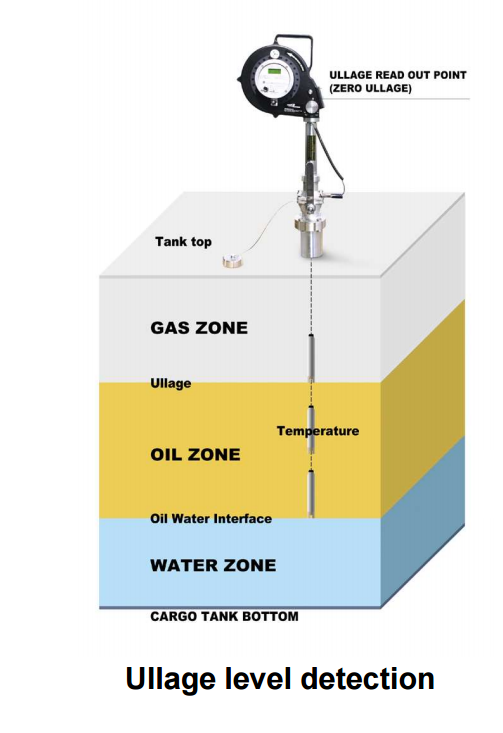
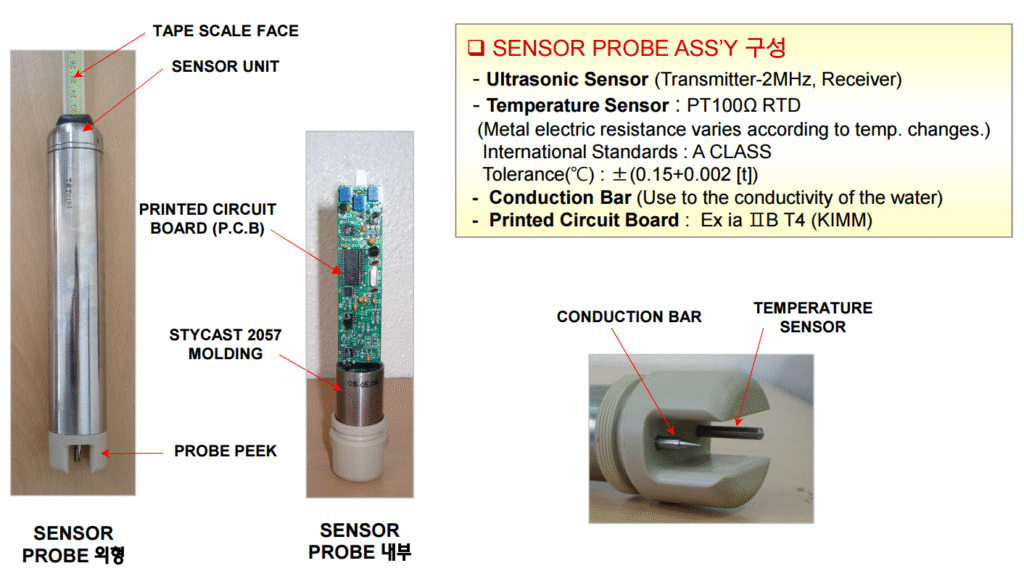
Ullage Detection (Ultrasonic Method):
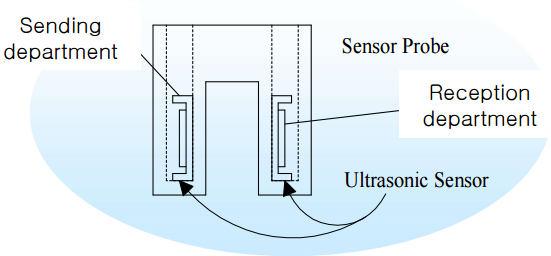
The device uses an ultrasonic method where liquid fills the gap between two piezoelectric transducers. Vibrations from the transmitter travel through the liquid to the receiver, triggering an electronic switch that indicates “OIL.” The beeping tone becomes intermittent when oil is detected.
Interface Detection (Conductivity Method):
Two electrodes measure the electrical resistance of the liquid. Water, being more conductive than oil, allows electrical current to pass through, activating a switch that indicates “WATER” and changes the beeping tone to continuous.
Temperature Measurement:
Simultaneously, temperature is measured using a PT100 RTD (Resistance Temperature Detector) sensor embedded in the electrode. All measurements, including ullage, interface levels, and temperature, are continuously displayed on the LCD for real-time monitoring.